Research reveals intergenerational programs can improve students’ empathy, proficiency and public engagement , however establishing those relationships beyond the home are tough to come by.
“We are the most age segregated culture,” claimed Mitchell. “There’s a great deal of research study available on just how elders are dealing with their lack of link to the neighborhood, because a great deal of those neighborhood resources have actually worn down in time.”
While some colleges like Jenks West Elementary in Oklahoma have actually built daily intergenerational interaction into their facilities, Mitchell reveals that effective understanding experiences can occur within a single classroom. Her technique to intergenerational understanding is supported by 4 takeaways.
1 Have Discussions With Pupils Prior To An Occasion
Prior to the panel, Mitchell guided trainees through an organized question-generating process She provided broad topics to brainstorm about and encouraged them to consider what they were genuinely curious to ask a person from an older generation. After assessing their suggestions, she chose the questions that would certainly function best for the event and designated student volunteers to ask them.
To assist the older adult panelists really feel comfortable, Mitchell also held a breakfast prior to the occasion. It gave panelists an opportunity to meet each various other and alleviate into the college setting before stepping in front of a room filled with eighth .
That kind of prep work makes a huge distinction, stated Ruby Belle Cubicle, a scientist from the Center for Info and Research Study on Civic Discovering and Involvement at Tufts University. “Having truly clear goals and expectations is just one of the most convenient ways to promote this process for youngsters or for older grownups,” she claimed. When pupils know what to expect, they’re extra certain stepping into unfamiliar discussions.
That scaffolding aided trainees ask thoughtful, big-picture questions like: “What were the significant civic problems of your life?” and “What was it like to be in a nation at war?”
2 Construct Links Into Job You’re Already Doing
Mitchell didn’t go back to square one. In the past, she had appointed students to talk to older adults. Yet she observed those discussions usually remained surface area degree. “Exactly how’s college? Exactly how’s football?” Mitchell stated, summing up the questions usually asked. “The moment for reflecting on your life and sharing that is pretty rare.”
She saw a chance to go deeper. By bringing those intergenerational conversations into her civics course, Mitchell really hoped pupils would listen to first-hand how older grownups experienced public life and start to see themselves as future citizens and engaged people.” [A majority] of baby boomers think that democracy is the very best system ,” she claimed. “However a 3rd of young people are like, ‘Yeah, we don’t truly need to vote.'”
Integrating this infiltrate existing educational program can be useful and effective. “Thinking about exactly how you can begin with what you have is a truly great method to execute this kind of intergenerational understanding without fully changing the wheel,” stated Booth.
That can imply taking a guest audio speaker browse through and building in time for trainees to ask questions or even inviting the speaker to ask questions of the trainees. The secret, claimed Cubicle, is moving from one-way discovering to an extra mutual exchange. “Beginning to think of little areas where you can implement this, or where these intergenerational links might already be happening, and try to boost the benefits and discovering outcomes,” she said.
3 Do Not Get Involved In Divisive Issues Off The Bat
For the very first occasion, Mitchell and her students purposefully steered clear of from controversial topics That decision aided develop an area where both panelists and students might really feel extra secure. Booth concurred that it is essential to begin slow. “You don’t want to leap hastily into several of these more delicate issues,” she stated. A structured conversation can help build convenience and trust, which prepares for much deeper, much more tough conversations down the line.
It’s also important to prepare older adults for how specific subjects might be deeply personal to pupils. “A large one that we see divides with in between generations is LGBTQ identifications ,” stated Booth. “Being a young adult with among those identities in the class and then talking with older adults that might not have this comparable understanding of the expansiveness of gender identification or sexuality can be challenging.”
Even without diving right into the most disruptive topics, Mitchell felt the panel stimulated abundant and meaningful discussion.
4 Leave Time For Reflection Afterwards
Leaving area for students to mirror after an intergenerational event is critical, said Booth. “Discussing exactly how it went– not almost the things you talked about, yet the procedure of having this intergenerational discussion– is important,” she stated. “It aids cement and grow the learnings and takeaways.”
Mitchell could inform the event reverberated with her students in genuine time. “In our amphitheater, the chairs are squeaky,” she said. “Whenever we have an occasion they’re not thinking about, the squeaking starts and you recognize they’re not concentrated. And we really did not have that.”
Later, Mitchell welcomed pupils to compose thank-you notes to the senior panelists and review the experience. The comments was overwhelmingly positive with one common motif. “All my students claimed regularly, ‘We want we had more time,'” Mitchell stated. “‘And we want we would certainly been able to have an extra authentic discussion with them.'” That comments is shaping how Mitchell plans her next event. She wishes to loosen the structure and offer students a lot more room to assist the discussion.
For Mitchell, the effect is clear. “The intergenerational voice brings a lot a lot more worth and grows the significance of what you’re trying to do,” she said. “It makes civics come alive when you bring in people who have lived a civic life to speak about the things they’ve done and the means they have actually attached to their community. Which can influence youngsters to also connect to their area.”
Episode Records
Nimah Gobir: It’s 10 am at Grace Knowledgeable Nursing Center in Oklahoma and a cluster of 4 – and 5 -year-olds bounce with enjoyment, their tennis shoes squeaking on the linoleum flooring of the rec room. Around them, seniors in wheelchairs and elbow chairs comply with along as an instructor counts off stretches. They shake out limb by limb and every once in a while a youngster includes a foolish panache to one of the activities and every person cracks a little smile as they attempt and keep up.
[Audio of teacher counting with students]
Nimah Gobir: Youngsters and senior citizens are moving together in rhythm. This is simply one more Wednesday early morning.
[Audio of grands exercising]
Nimah Gobir: These preschoolers and kindergartners go to school here, within the senior living facility. The children are here everyday– learning their ABCs, doing art projects, and eating treats along with the elderly homeowners of Poise– that they call the grands.
Amanda Moore: When it originally started, it was the nursing home. And close to the nursing home was an early youth facility, which resembled a day care that was connected to our area. And so the residents and the trainees there at our very early childhood years center started making some links.
Nimah Gobir: This is Amanda Moore, the principal of Jenks West Elementary, the institution inside of Elegance. In the very early days, the youth facility saw the bonds that were creating between the youngest and oldest members of the neighborhood. The proprietors of Elegance saw how much it suggested to the citizens.
Amanda Moore: They made a decision, alright, what can we do to make this a permanent program?
Amanda Moore: They did a restoration and they improved space to ensure that we might have our trainees there housed in the nursing home daily.
Nimah Gobir: This is MindShift, the podcast concerning the future of knowing and exactly how we increase our kids. I’m Nimah Gobir. Today we’ll check out just how intergenerational discovering works and why it may be specifically what institutions require even more of.
Nimah Gobir: Schedule Buddies is one of the normal activities pupils at Jenks West Elementary perform with the grands. Every other week, children stroll in an orderly line with the center to meet their reviewing companions.
Nimah Gobir: Katy Wilson, a Kindergarten instructor at the institution, states simply being around older adults changes exactly how students move and act.
Katy Wilson: They start to learn body control more than a typical trainee.
Katy Wilson: We know we can not run out there with the grands. We understand it’s not safe. We might trip somebody. They can obtain injured. We find out that balance much more since it’s greater risks.
[Mariah giving students their grands assignment]
Nimah Gobir: In the faculty lounge, youngsters resolve in at tables. An educator pairs students up with the grands.
Nimah Gobir: In some cases the youngsters review. Occasionally the grands do.
Nimah Gobir: In any case, it’s individually time with a trusted adult.
Katy Wilson: Which’s something that I couldn’t accomplish in a typical class without all those tutors essentially integrated in to the program.
Nimah Gobir: And it’s functioning. Jenks West has actually tracked student progress. Children who go through the program often tend to rack up higher on analysis evaluations than their peers.
Katy Wilson: They reach read books that perhaps we don’t cover on the academic side that are extra enjoyable books, which is terrific due to the fact that they get to check out what they want that maybe we would not have time for in the common classroom.
Nimah Gobir: Granny Margaret enjoys her time with the kids.
Grandmother Margaret: I get to deal with the children, and you’ll decrease to read a publication. Sometimes they’ll read it to you because they have actually got it remembered. Life would be type of boring without them.
Nimah Gobir: There’s additionally research study that kids in these types of programs are more likely to have far better attendance and stronger social abilities. Among the long-term benefits is that pupils become more comfy being around people who are different from them. Like a grand in a wheelchair, or one who does not interact quickly.
Nimah Gobir: Amanda informed me a tale concerning a pupil that left Jenks West and later on attended a different college.
Amanda Moore: There were some students in her course that were in wheelchairs. She stated her child normally befriended these trainees and the educator had really identified that and told the mommy that. And she claimed, I really think it was the communications that she had with the homeowners at Grace that assisted her to have that understanding and compassion and not really feel like there was anything that she required to be worried about or worried of, that it was just a component of her every day.
Nimah Gobir: The program benefits the grands also. There’s proof that older adults experience boosted mental health and less social seclusion when they hang out with youngsters.
Nimah Gobir: Also the grands that are bedbound benefit. Simply having kids in the structure– hearing their giggling and songs in the corridor– makes a distinction.
Nimah Gobir: So why don’t a lot more areas have these programs?
Amanda Moore: You actually have to have everyone on board.
Nimah Gobir: Right here’s Amanda once again.
Amanda Moore: Since both sides saw the advantages, we were able to create that collaboration together.
Nimah Gobir: It’s most likely not something that a college might do on its own.
Amanda Moore: Due to the fact that it is pricey. They preserve that center for us. If anything goes wrong in the rooms, they’re the ones that are dealing with all of that. They constructed a play ground there for us.
Nimah Gobir: Grace also uses a permanent intermediary, who supervises of interaction in between the assisted living facility and the institution.
Amanda Moore: She is always there and she assists organize our tasks. We fulfill month-to-month to plan out the activities citizens are mosting likely to make with the pupils.
Nimah Gobir: More youthful individuals interacting with older individuals has lots of advantages. But what if your school doesn’t have the resources to develop a senior facility? After the break, we check out just how an intermediate school is making intergenerational knowing operate in a different method. Stay with us.
Nimah Gobir: Prior to the break we learned about exactly how intergenerational knowing can increase literacy and empathy in younger youngsters, not to mention a number of advantages for older adults. In an intermediate school class, those same concepts are being used in a brand-new method– to aid strengthen something that many people worry gets on unsteady ground: our freedom.
Ivy Mitchell: My name is Ivy Mitchell. I instruct eighth quality civics in Massachusetts.
Nimah Gobir: In Ivy’s civics class, students discover how to be active members of the neighborhood. They also discover that they’ll require to deal with people of all ages. After greater than 20 years of teaching, Ivy noticed that older and more youthful generations don’t frequently obtain an opportunity to talk to each various other– unless they’re family.
Ivy Mitchell: We are one of the most age-segregated society. This is the moment when our age partition has been one of the most severe. There’s a great deal of study out there on how elders are taking care of their absence of connection to the community, since a great deal of those neighborhood sources have actually eroded in time.
Nimah Gobir: When children do speak to adults, it’s usually surface area degree.
Ivy Mitchell: Exactly how’s institution? How’s football? The minute for reviewing your life and sharing that is rather uncommon.
Nimah Gobir: That’s a missed out on possibility for all sort of reasons. However as a civics educator Ivy is specifically concerned concerning something: growing students who are interested in electing when they get older. She thinks that having much deeper conversations with older grownups about their experiences can aid students better recognize the past– and perhaps feel a lot more bought shaping the future.
Ivy Mitchell: Ninety percent of child boomers believe that freedom is the best method, the only ideal method. Whereas like a 3rd of young people resemble, yeah, you know, we do not need to vote.
Nimah Gobir: Ivy wishes to shut that void by linking generations.
Ivy Mitchell: Democracy is a very valuable thing. And the only place my students are hearing it is in my classroom. And if I might bring a lot more voices in to claim no, freedom has its defects, but it’s still the most effective system we’ve ever found.
Nimah Gobir: The concept that public learning can originate from cross-generational relationships is backed by study.
Ruby Belle Booth: I do a lot of thinking of young people voice and organizations, youth civic growth, and just how youths can be much more involved in our freedom and in their neighborhoods.
Nimah Gobir: Ruby Belle Booth wrote a report about young people civic interaction. In it she says together young people and older adults can take on big challenges facing our democracy– like polarization, culture wars, extremism, and false information. However in some cases, misunderstandings between generations hinder.
Ruby Belle Cubicle: Youths, I assume, have a tendency to look at older generations as having kind of antiquated sights on everything. And that’s mainly partly since younger generations have different sights on issues. They have different experiences. They have various understandings of modern technology. And as a result, they sort of judge older generations appropriately.
Nimah Gobir: Youths’s sensations in the direction of older generations can be summarized in two prideful words.
Nimah Gobir: “OK, Boomer,” which is frequently said in feedback to an older individual being out of touch.
Ruby Belle Booth: There’s a great deal of wit and sass and mindset that youngsters offer that relationship which divide.
Ruby Belle Booth: It speaks to the difficulties that youths face in feeling like they have a voice and they seem like they’re commonly dismissed by older people– because usually they are.
Nimah Gobir: And older people have ideas regarding more youthful generations as well.
Ruby Belle Booth: Sometimes older generations resemble, all right, it’s all good. Gen Z is mosting likely to conserve us.
Ruby Belle Cubicle: That places a lot of pressure on the extremely tiny group of Gen Z who is actually activist and involved and attempting to make a great deal of social adjustment.
Nimah Gobir: Among the huge obstacles that teachers deal with in producing intergenerational understanding possibilities is the power discrepancy in between adults and trainees. And institutions just enhance that.
Ruby Belle Cubicle: When you move that already existing age dynamic into a school setup where all the adults in the area are holding added power– teachers giving out qualities, principals calling trainees to their workplace and having corrective powers– it makes it to ensure that those currently entrenched age dynamics are a lot more difficult to get rid of.
Nimah Gobir: One way to offset this power imbalance can be bringing individuals from beyond the school into the classroom, which is precisely what Ivy Mitchell, our instructor in Boston, chose to do.
Ivy Mitchell: Thanks for coming today.
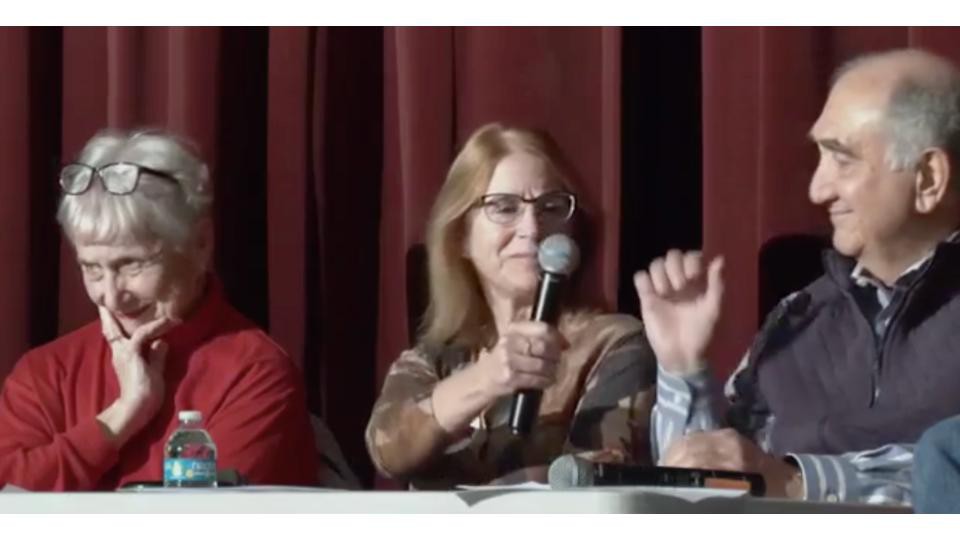
Nimah Gobir: Her pupils came up with a checklist of concerns, and Ivy put together a panel of older grownups to answer them.
Ivy Mitchell (event): The idea behind this occasion is I saw a trouble and I’m trying to resolve it. And the concept is to bring the generations with each other to assist address the question, why do we have civics? I know a lot of you wonder about that. And likewise to have them share their life experience and start developing neighborhood connections, which are so vital.
Nimah Gobir: One at a time, trainees took the mic and asked concerns to Berta, Steve, Tony, Eileen, and Jane. Inquiries like …
Student: Do any one of you believe it’s difficult to pay taxes?
Pupil: What is it like to be in a country at war, either in your home or abroad?
Trainee: What were the major public problems of your life, and what experiences shaped your sights on these concerns?
Nimah Gobir: And individually they provided solution to the trainees.
Steve Humphrey: I imply, I think for me, the Vietnam War, for instance, was a substantial concern in my lifetime, and, you understand, still is. I suggest, it shaped us.
Tony Rise: Yeah, we had, in our generation, we had a great deal going on at once. We likewise had a huge civil liberties movement, Martin Luther King, that you most likely will examine, all extremely historical, if you return and take a look at that. So throughout our generation, we saw a great deal of major adjustments inside the United States.
Eileen Hillside: The one that I kind of keep in mind, I was young throughout the Vietnam War, however women’s rights. So back in’ 74 is when ladies can actually obtain a credit card without– if they were married– without their other half’s signature.
Nimah Gobir: And afterwards they turned the panel around so seniors could ask questions to pupils.
Eileen Hill: What are the concerns that those of you in institution have now?
Eileen Hillside: I mean, specifically with computers and AI– does the AI scare any one of you? Or do you feel that this is something you can truly adapt to and recognize?
Pupil: AI is beginning to do brand-new points. It can start to take control of people’s jobs, which is concerning. There’s AI songs currently and my papa’s a musician, and that’s worrying due to the fact that it’s not good right now, however it’s starting to improve. And it could wind up taking over individuals’s jobs at some point.
Pupil: I assume it actually depends on how you’re utilizing it. Like, it can definitely be used completely and practical points, however if you’re using it to fake pictures of individuals or points that they claimed, it’s bad.
Nimah Gobir: When Ivy debriefed with pupils after the occasion, they had overwhelmingly positive points to state. But there was one item of responses that stood apart.
Ivy Mitchell: All my students said consistently, we desire we had even more time and we desire we ‘d been able to have a much more genuine conversation with them.
Ivy Mitchell: They intended to be able to speak, to really get into it.
Nimah Gobir: Following time, she’s intending to loosen the reins and make space for more authentic discussion.
Some of Ruby Belle Cubicle’s research study influenced Ivy’s task. She noted some points that make intergenerational activities a success. Ivy did a lot of these points!
Nimah Gobir: One: Ivy had discussions with her students where they generated concerns and talked about the occasion with students and older folks. This can make everybody feel a great deal a lot more comfy and much less nervous.
Ruby Belle Cubicle: Having really clear objectives and assumptions is just one of the simplest methods to facilitate this process for young people or for older grownups.
Nimah Gobir: Two: They didn’t enter challenging and divisive inquiries throughout this initial occasion. Perhaps you don’t wish to jump hastily into several of these extra sensitive problems.
Nimah Gobir: 3: Ivy constructed these connections into the work she was currently doing. Ivy had actually assigned pupils to speak with older grownups before, yet she intended to take it even more. So she made those discussions component of her class.
Ruby Belle Booth: Thinking about exactly how you can start with what you have I believe is a really wonderful way to begin to apply this sort of intergenerational understanding without fully transforming the wheel.
Nimah Gobir: 4: Ivy had time for reflection and responses afterward.
Ruby Belle Cubicle: Talking about how it went– not nearly the important things you spoke about, but the process of having this intergenerational conversation for both parties– is important to really cement, strengthen, and even more the learnings and takeaways from the opportunity.
Nimah Gobir: Ruby does not say that intergenerational connections are the only option for the troubles our freedom deals with. As a matter of fact, on its own it’s inadequate.
Ruby Belle Cubicle: I believe that when we’re considering the lasting wellness of freedom, it needs to be based in communities and link and reciprocity. An item of that, when we’re thinking of including a lot more young people in freedom– having a lot more youths turn out to elect, having more youngsters that see a path to produce modification in their areas– we need to be thinking of what an inclusive freedom appears like, what a democracy that invites young voices resembles. Our democracy has to be intergenerational.